
The Seasonal Homeowner's Guide to Securing Empty Homes Against Flooding

Updated: Feb 22
You've built a life in two places. Maybe you escape Minnesota winters for the Arizona sun, or you've recently relocated from a flood-prone coast to higher ground while keeping your original property as a rental. Either way, you're part of a growing movement of Americans who split time between homes—or who've made the practical decision to move somewhere safer while maintaining property elsewhere.
Here's the uncomfortable truth: while you're gone, your empty home faces storms, floods, and extreme weather events without anyone there to respond.
And those events are becoming more frequent, more intense, and less predictable than ever before.
Why Seasonal Residents and Relocators Need to Pay Attention Now
The numbers tell a stark story. Millions of Americans now live as seasonal residents or maintain properties in multiple states [1]. Meanwhile, climate-related disasters have increased dramatically over the past few decades, with flood events becoming particularly devastating for property owners [2].
If you're a snowbird heading south each winter, your northern home sits vulnerable during spring thaw and flash floods. If you've relocated from Florida or the Gulf Coast but kept your property, hurricane season arrives whether you're there or not.
The problem isn't just about being away during a storm. It's about the gaps—literally. Water finds every unsealed crack around doors, windows, and garage thresholds. An empty home can't alert you to rising water until the damage is already done.
The Real Cost of Being Somewhere Else
Let's talk dollars for a moment.
Average flood damage to a home runs between $25,000 and $50,000, depending on the severity and location [3]. But for absentee owners, the costs compound. You're not just paying for repairs—you're paying for:
Emergency travel back to the property
Extended hotel stays while overseeing contractors
Lost rental income if it's an investment property
Potential mold remediation from delayed discovery
Higher insurance premiums after a claim
One common scenario: a homeowner discovers water damage at their vacation property three weeks after a storm. By then, the standing water has warped hardwood floors throughout the first level and mold has started colonizing the walls. What might have been a $15,000 water intrusion problem becomes a $60,000 gut renovation.
That's the multiplier effect of distance.

Understanding Your Empty Home's Vulnerabilities
Water doesn't need an invitation. It exploits every opportunity.
Common Entry Points for Floodwater
Exterior Doors: The gap between your front door and threshold might be less than half an inch—but that's more than enough for rising water to pour through. Standard weatherstripping handles rain, not standing water pushing against it.
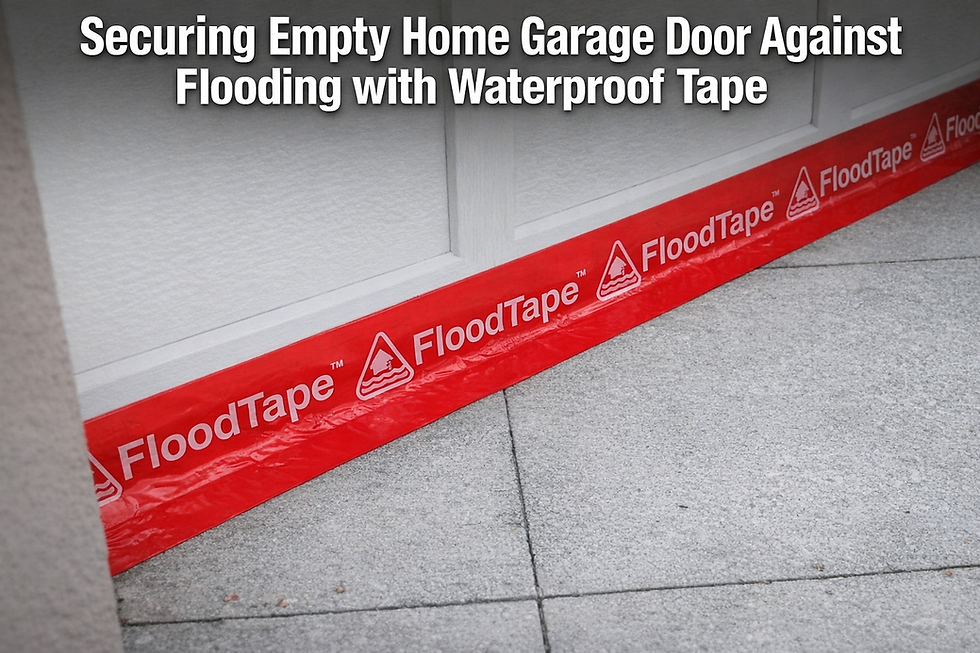
Garage Doors: These are often the weakest link. The seals at the bottom degrade over time, and the gaps at the sides and top rarely get attention. Garages flood first, and water finds its way into the house from there.
Windows and Sliding Doors: Ground-level windows and sliding glass doors present obvious risks. But even elevated windows can leak during wind-driven rain when pressure differentials force water through imperfect seals.
HVAC Vents and Utility Penetrations: Every pipe, wire, and duct that enters your home creates a potential pathway for water.
A Comprehensive Look at Protection Methods
Before diving into specific solutions, it's worth understanding the full landscape of what's available to protect an empty home. Each method has its place depending on your situation, budget, and how long you'll be away.
Sandbags remain the traditional go-to for many homeowners.
They're effective at diverting water flow and are often available free from local municipalities before major storms. However, they require you to be present before a storm, demand significant physical labor to fill and stack, create disposal challenges afterward, and don't work well if you're 1,500 miles away when the forecast turns ugly.
Permanent flood barriers and flood doors offer excellent long-term protection for primary residences. They can withstand significant water pressure and require no last-minute action.
The drawbacks: they cost thousands to install, may require permits and HOA approval, and represent a significant investment that makes less sense for seasonal or rental properties you might sell.
Water-activated barriers (like Quick Dam products) swell when they contact water, creating a temporary dam. They're lighter than sandbags and can be pre-positioned. However, they typically only block a few inches of water height, are single-use, and don't seal the actual entry points where water infiltrates.
Smart water monitoring systems deserve consideration as part of any comprehensive approach. Sensors placed near vulnerable entry points can alert your phone if they detect moisture, giving you early warning even when you're across the country. They don't prevent flooding, but they dramatically reduce the time between water intrusion and your awareness of it—which can save thousands in secondary damage.
Automatic water shut-off valves protect against a different but related threat: pipe bursts and internal leaks. For homes left empty during winter, these can prevent catastrophic damage from frozen pipes.
Temporary adhesive sealing products fill an important gap for absentee owners who need protection that can be applied before departure and removed cleanly upon return. This is where FloodTape® enters the picture.
Why Traditional Methods Often Fall Short for Absentee Owners
The core challenge for seasonal residents isn't finding a solution—it's finding one that works when you can't be there to implement it at the last minute.
Duct tape and plastic sheeting is the desperate homeowner's last resort. It rarely creates a watertight seal, and when you remove it—weeks or months later—you'll likely find it's bonded to your paint, leaving a sticky mess that requires repainting.
What absentee owners actually need is something that can be applied before you leave, stays in place for weeks without degrading, genuinely blocks water intrusion at entry points, and comes off cleanly when you return—without damaging surfaces.
How FloodTape® Addresses the Absentee Owner Challenge
FloodTape® is an 8-inch wide, 20-foot long adhesive tape specifically designed to seal entry points against floodwater. It adheres to wood, glass, metal, stucco, vinyl, and stone—basically any surface around your doors and windows [4]. And unlike duct tape, it removes cleanly without leaving residue or damaging paint [5].
The practical implications for seasonal homeowners are significant:
Apply before you leave for the season. You don't need to be present when storms hit. Seal your vulnerable entry points before your departure, and the protection stays active while you're gone.
It stays put. FloodTape® maintains its seal for extended periods when stored and applied properly [6]. You're not racing back to reapply before every weather event.
Remove without damage. When you return, peel it off. No scraping, no residue, no repainting. Your surfaces stay intact.
One product does the job. Unlike competing solutions that require multiple products—tape plus paste plus liquid sealant—FloodTape® works as an all-in-one barrier [7].
Being Realistic About What FloodTape® Can and Can't Do
FloodTape® excels as a temporary protective measure for sealing entry points against low-level flooding. To be clear about appropriate expectations:
Best suited for:
Sealing entry points against water reaching door and window level
Protection during extended absences
Situations where you need removable, damage-free sealing
Properties with multiple potential entry points
Not designed for:
Deep flooding or major storm surge (in extreme cases, structural barriers or evacuation are the appropriate responses)
Permanent installation (it's designed as temporary protection)
Application on wet surfaces (must be applied to dry surfaces before water arrives)
Replacing comprehensive flood mitigation for high-risk properties
For most seasonal resident situations—where you're protecting against the typical flood events that damage empty homes—FloodTape® provides practical, effective protection as part of a broader preparedness approach.
Step-by-Step: Securing Your Empty Home Before Departure
Here's how to protect your property before you head out for the season:
Step 1: Inspect and Clean
Walk the exterior of your home and identify every potential water entry point. Pay special attention to:
Front, back, and side entry doors
Garage doors (bottom, sides, and top)
Ground-level windows
Sliding glass doors
Any door or window that's shown previous signs of water intrusion
Clean these surfaces thoroughly. FloodTape® adheres best to dry, dust-free surfaces [8]. A quick wipe with a dry cloth removes debris that could compromise the seal.
Step 2: Measure and Cut
Measure the perimeter of each opening you're sealing. A standard exterior door requires roughly 20 feet of tape to cover the full frame. Windows vary, but most residential windows need 10–15 feet.
Cut FloodTape® to length for each application. Leave yourself an extra inch or two at corners—you can trim or overlap as needed.
Step 3: Apply to Dry Surfaces
Starting at one corner, peel the backing and press FloodTape® firmly along the seam between the door (or window) and its frame. Work your way around the entire perimeter, smoothing as you go to eliminate air pockets.
For garage doors, apply tape along the bottom seal and up both side rails. If your garage door has visible gaps at the top, seal those as well.
Step 4: Reinforce Critical Areas
Corners and transitions are where seals most often fail. Press extra firmly at these points, or apply a small overlapping piece for added protection.
If you have a door you won't be using at all during your absence, you can tape completely across the threshold for maximum protection.
Step 5: Document Your Work
Take photos of every sealed entry point. If you file an insurance claim later, documentation showing you took preventive measures can support your case. It also helps you remember exactly what you did when it's time to remove the tape months later.
Step 6: Set Up Monitoring
Consider adding a water leak sensor near your most vulnerable entry points. Many smart home sensors will alert your phone if they detect moisture, giving you early warning even when you're across the country. This pairs well with sealing—FloodTape® keeps water out, and sensors tell you if any gets through anyway.
Common Risk Profiles: How This Plays Out
Let's look at how proactive sealing protects empty homes in typical scenarios seasonal residents face.
Profile 1: The Northern Snowbird
The Risk: Owners of homes in coastal Connecticut, the Jersey Shore, or similar areas who spend November through April in warmer climates face spring nor'easters and flash floods while they're still away. Water seeping under back doors can go unnoticed for weeks, allowing damage to spread to adjacent rooms.
The Approach: Before heading south, seal all exterior doors with FloodTape®. When storms come through in late winter or early spring, the protection is already in place. Upon returning in May, peel off the tape—finding zero water damage avoids what could have been a significant repair bill.
Profile 2: The Landlord with Distance
The Risk: Property owners who've relocated but kept homes as rentals in hurricane-prone areas face particular challenges. Between tenants during storm season, properties sit empty and vulnerable. Floodwater entering through garages can soak carpet throughout first floors, leading to expensive repairs and lost rental income during the months-long restoration.
The Approach: Whenever the property sits vacant during storm season, have a local property manager apply FloodTape® to all entry points. The cost is minimal compared to potential damage. During hurricane warnings, the tape holds while water pools in the neighborhood—but stays outside the structure.
Profile 3: The Vacation Home Owner
The Risk: Beach cottage owners who visit a few times each year often discover too late that their homeowner's insurance doesn't cover flood damage—a common gap for properties outside designated flood zones. Repair bills come entirely out of pocket.
The Approach: Seal the cottage before each departure during storm season. The investment of a few rolls of tape costs a fraction of potential repair bills. Close calls with storms that bring water to the doorstep—but not inside—validate the preparation.
Your Pre-Departure Security Checklist
Print this out and work through it before you leave:
Flood Protection
[ ] All exterior doors sealed with FloodTape®
[ ] Garage door bottom and sides sealed
[ ] Ground-level windows sealed
[ ] Sliding doors sealed
[ ] Photos taken of all sealed entry points
Water System
[ ] Main water supply shut off (prevents pipe burst damage)
[ ] Water heater set to vacation mode or lowest setting
[ ] Toilets treated with antifreeze if winterizing (cold climates)
[ ] Consider automatic shut-off valve installation
Utilities and Monitoring
[ ] HVAC set to maintain minimum safe temperature
[ ] Water leak sensors placed near vulnerable areas
[ ] Trusted neighbor or property manager has contact info
[ ] Smart home alerts configured for your phone
Documentation
[ ] Home inventory updated with photos
[ ] Insurance policy reviewed for coverage gaps (flood vs. homeowners)
[ ] Emergency contacts list left with neighbor/manager
[ ] Copy of all documents stored in cloud backup
Exterior
[ ] Gutters cleared
[ ] Downspouts directing water away from foundation
[ ] Trees trimmed away from windows and roof
[ ] Outdoor furniture secured or stored

Understanding Your Insurance Situation
A brief but important note: many seasonal homeowners don't realize that standard homeowner's insurance typically doesn't cover flood damage. Flood insurance requires a separate policy, usually through the National Flood Insurance Program or private insurers.
Additionally, some policies have vacancy clauses that limit coverage for homes left empty beyond a certain period (often 30-60 days). If you're leaving a property vacant for extended periods, review your policy carefully and discuss options with your insurance agent.
Preventive measures like sealing entry points don't replace insurance—but they can reduce the likelihood of needing to file a claim at all, which protects both your property and your premiums.
The Peace of Mind Factor
Here's what it really comes down to.
When you're sitting in your winter home watching the Weather Channel, you don't want to feel helpless. You don't want to book an emergency flight and hope you get there before the water does. You don't want to call your neighbor at midnight asking them to stack sandbags in the rain.
Proactive protection means you've already handled it. The vulnerable points are sealed. Monitoring systems are in place. Your home can weather the storm without you physically standing guard.
That's worth something—especially when the alternative is watching radar images and imagining water creeping across your floors.
Take Action Before Your Next Departure
Weather patterns aren't becoming more predictable. If anything, the opposite is true. The 100-year flood seems to happen every few years now in many regions [9]. Seasonal patterns that once felt reliable have shifted.
The homes we leave empty—whether for winter warmth, work obligations, or permanent relocation—face these risks without us present to respond.
You can't control the weather. But you can control how prepared your property is to handle it.
Ready to protect your empty home? Get FloodTape® now and seal your entry points before your next departure. Your property will thank you—and so will your future self when the storm passes and your home stays dry.
Frequently Asked Questions
How long can FloodTape® stay applied during an extended absence?
FloodTape® is designed for temporary protection and maintains its adhesive properties for extended periods when applied properly to clean, dry surfaces. For seasonal absences lasting several months, the seal remains effective. Inspect it when you return and reapply before your next departure. Store unused rolls in a cool, dry location for up to 24 months [6].
Will FloodTape® damage the paint or finish on my doors and windows?
No. One of FloodTape®'s key advantages is that it peels off cleanly without leaving residue or damaging underlying paint, varnish, or finishes [5]. Homeowners have confirmed that even antique wood doors showed no damage after tape removal. This makes it particularly useful for properties where surface damage isn't acceptable.
Can I have a property manager or neighbor apply FloodTape® if a storm threatens while I'm away?
Absolutely. FloodTape® requires no special tools or training—it's designed for straightforward DIY application. Leave detailed instructions and a supply of tape with your trusted local contact. They can apply it in minutes if a storm warning is issued, giving your home protection even when you're across the country.
Does FloodTape® work on stucco, which is common on older Florida and Southwest homes?
Yes. FloodTape® adheres to multiple building materials including stucco, wood, glass, metal, vinyl, and stone [4]. This versatility makes it particularly useful for regional architectural styles. Ensure the stucco surface is dry and relatively dust-free before application for the best seal.
How much FloodTape® do I need for a typical home?
A single 20-foot roll covers approximately one standard exterior door (measuring all four sides of the frame). Most homes need 2-4 rolls for complete protection of doors and vulnerable windows. Consider the 6-pack bundle if you're protecting multiple entry points or multiple properties [10].
How does FloodTape® compare to other flood protection options?
FloodTape® fills a specific niche: temporary, pre-applied protection for entry points that removes cleanly. Sandbags work well but require last-minute application and physical labor. Permanent flood barriers offer superior protection but at much higher cost and aren't practical for seasonal properties. Water-activated barriers divert flow but don't seal entry points. FloodTape® is best used alongside monitoring systems as part of a comprehensive approach for absentee owners.
About FloodTape®
FloodTape® was invented by Matthias Herzog after 15 years of personal experience protecting his St. Augustine, Florida home from hurricanes and floods. Frustrated by sandbags that were exhausting to deploy, duct tape that destroyed paint, and silicone caulk that wouldn't come off, he developed FloodTape® as a simple DIY solution that actually works—and actually comes off cleanly afterward. The product has been tested in real flood conditions by homeowners across the country, with users reporting successful protection against standing water. FloodTape® is patent-pending, made with quality materials, and designed specifically for the unique challenges homeowners face during flood events.
Cited Works
FEMA — "Protect Your Property from Flooding."
NOAA National Centers for Environmental Information — "Billion-Dollar Weather and Climate Disasters."
Insurance Information Institute — "Facts + Statistics: Flood Insurance." https://www.iii.org/fact-statistic/facts-statistics-flood-insurance
FloodTape — "FAQs for FloodTape®."
FloodTape — "Reviews for FloodTape®."
FloodTape — "Simple DIY Flood Protection Tape Product Page."
FloodTape — "FloodTape® Waterproof Tape for Flood Protection."
FloodTape — "About FloodTape®."
First Street Foundation — "The First National Flood Risk Assessment."
FloodTape — "FloodTape® 6-Pack."


Comments