
How Retail Stores and Restaurants Protect Against Water Damage from Toilet Overflows and Burst Pipes

Updated: Sep 29
A toilet overflows in your restaurant's restroom at 7 PM on a Friday night. Water spreads across the tile, creeping toward the dining area where forty customers are finishing their meals. You have minutes—not hours—before this becomes a serious problem.
For most retail store owners and restaurant managers, water emergencies like this arrive without warning. Unlike hurricanes or seasonal flooding that come with forecasts, indoor plumbing failures strike at the worst possible moments. And the damage compounds quickly: every minute water spreads means more cleanup, more cost, and more risk to your business.
The first priority in any plumbing emergency is always the same: shut off the water supply. Locate the shut-off valve behind the toilet, under the sink, or at the main building supply and stop the flow immediately. But even after you cut the water, gallons are already on the floor—and they're still moving. That existing water needs to be contained before it reaches customer areas, inventory, or electrical equipment.
This is where smart business owners are borrowing a page from hurricane preparedness. The same DIY flood protection methods homeowners use to seal doors against storm surges work remarkably well for containing indoor plumbing disasters. The principle is identical: create a temporary barrier that stops water from spreading where it doesn't belong.
Why Commercial Leak Protection Deserves Your Attention
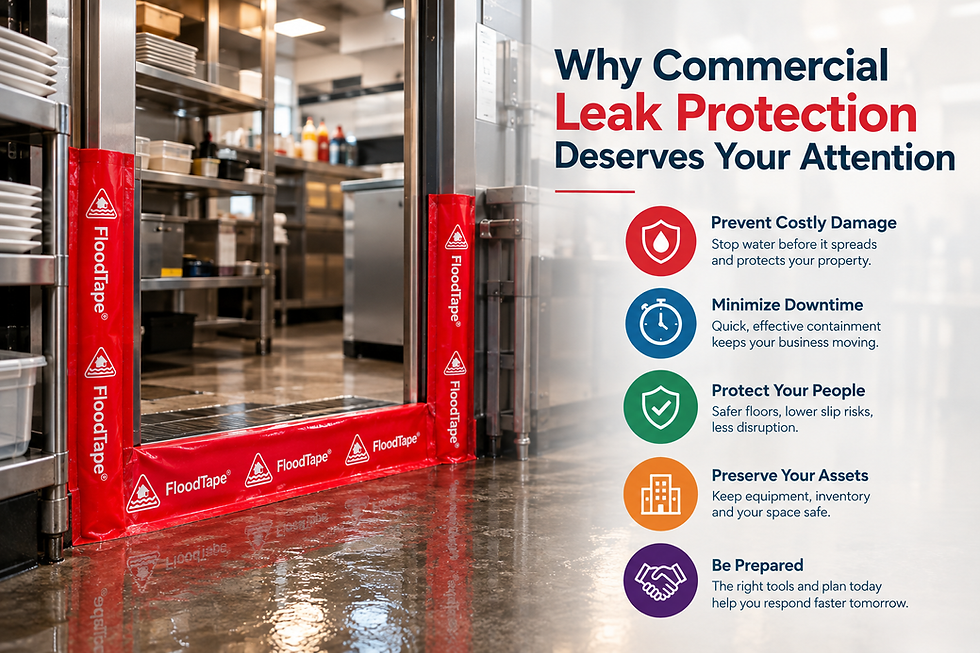
Water damage doesn't distinguish between residential and commercial properties. But when it hits your business, the consequences multiply.
Consider the actual stakes:
Revenue loss from emergency closures—even a few hours during peak service can cost thousands
Inventory damage to products, supplies, and equipment that may not be fully insured
Slip-and-fall liability if customers encounter wet floors
Health code violations for restaurants dealing with potentially contaminated water
Reputation damage that persists long after the floors dry
According to the Insurance Information Institute, water damage and freezing represent a significant portion of commercial property claims [1]. The Institute for Business and Home Safety notes that water damage is among the most common and costly perils for businesses, with average claims running into tens of thousands of dollars [2]. Many standard business policies include limitations on coverage, particularly when inadequate maintenance or delayed response contributes to the damage.
Understanding Common Commercial Water Emergencies
Before discussing containment strategies, it helps to understand what you're actually dealing with.
Toilet Overflows
The most frequent culprit in commercial settings. A clogged toilet combined with a malfunctioning flapper valve or stuck fill mechanism can discharge several gallons per minute onto your floor. In high-traffic restrooms common to restaurants and retail spaces, this happens more often than most owners realize.
Burst Pipes
Temperature changes, aging infrastructure, and water pressure fluctuations can cause supply lines to fail. When a pipe bursts behind a wall or beneath a sink, the problem may not become apparent until water is already pooling in visible areas.
Supply Line Failures
The flexible hoses connecting toilets, sinks, ice machines, and dishwashers to water supplies have a finite lifespan. When they fail, they often fail completely—spraying water continuously until someone locates and closes the shut-off valve.
Drain Backups
When main drain lines clog, water doesn't simply stop flowing. It reverses. In restaurants or retail spaces with floor drains, this can mean contaminated water spreading across large areas rapidly.

Why Traditional Responses Fall Short
The typical emergency playbook has significant gaps:
Towels and mops help with cleanup, but while you're mopping, water continues spreading. You're essentially bailing a boat that's still taking on water.
Sandbags are impractical for indoor commercial use. They're heavy, messy, difficult to store, and leave residue on finished floors.
Shutting off the water is essential—and should always be your first action—but it doesn't address the water already on the floor. That water keeps moving toward lower ground, which is often your customer area or stockroom.
Calling a plumber is necessary, but response time varies. During the wait, damage accumulates.
The missing element is a practical method to contain water where it is while you address the source and await professional assistance.
How FloodTape® Creates Temporary Barriers for Indoor Water Containment
FloodTape® was originally engineered for hurricane and storm surge protection—creating watertight seals around doors and windows against rising floodwaters. The same technology applies effectively to indoor plumbing emergencies when used correctly.
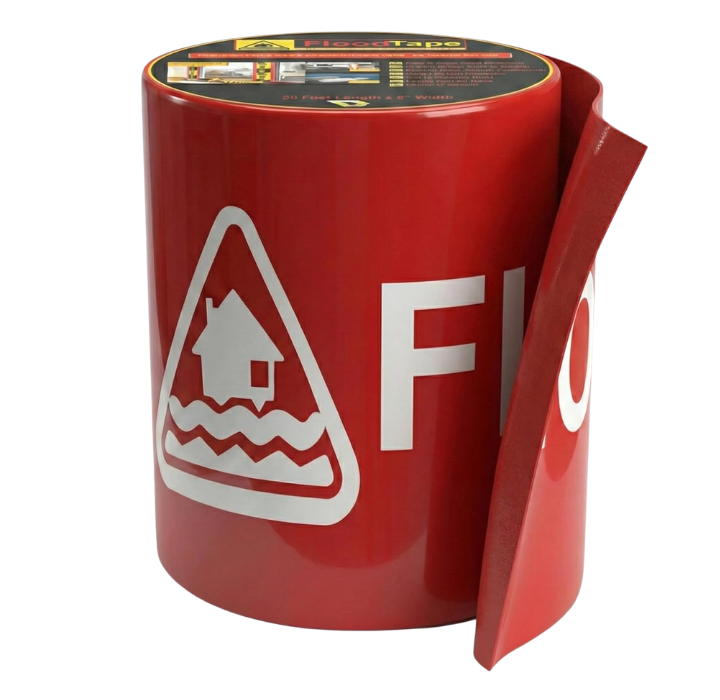
FloodTape® is an 8-inch wide adhesive tape designed to create temporary waterproof barriers. It adheres to multiple surfaces—tile, concrete, sealed wood, metal, glass—and forms a seal that helps block water from spreading [3].
The critical application principle: FloodTape® works by sealing the gap between a closed door and the floor, or by creating a seal across a threshold where a door or barrier already exists. The tape doesn't stand upright on its own as a dam—it seals the junction between existing structures and the floor to prevent water from seeping through gaps.
For commercial applications, this means:
Sealing closed restroom doors at the floor junction to contain toilet overflows
Sealing thresholds between kitchen and dining areas where a physical door or barrier exists
Creating sealed barriers at stockroom doorways to protect inventory
Sealing around equipment room doors to protect electrical panels and servers
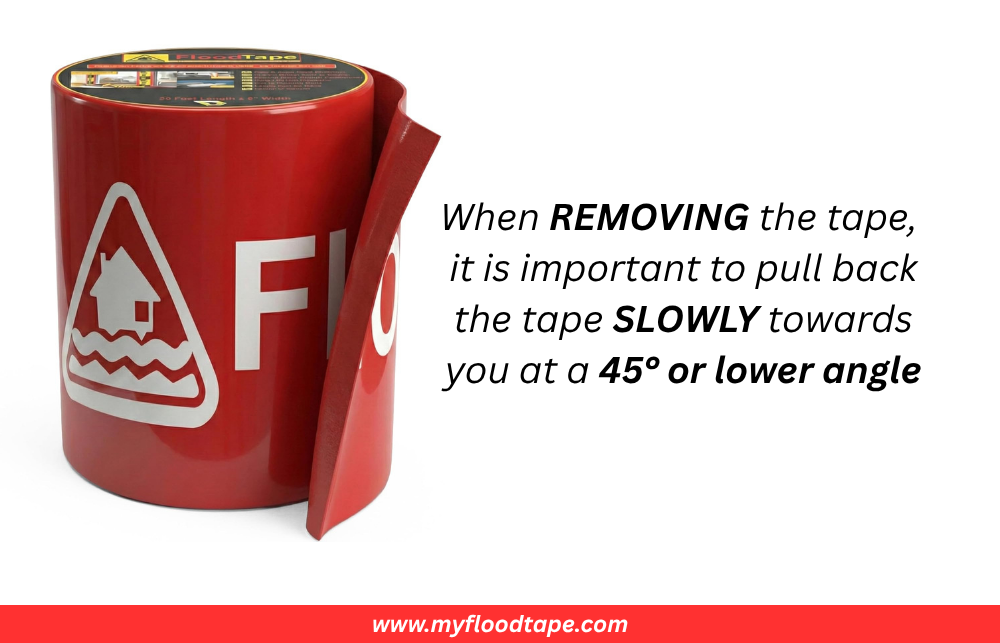
The tape removes cleanly without damaging surfaces or leaving residue when pulled slowly toward you at a 45-degree angle or lower [4]. No torn paint. No sticky mess. No repairs needed after the crisis passes.
Step-by-Step: Containing a Commercial Water Emergency
Here's how to handle a restroom overflow threatening your dining area:
Step 1: Shut Off the Water Supply
This is always the first action. Locate the shut-off valve—typically behind the toilet near the floor, or under sinks for supply line failures. Turn it clockwise to close. If you can't find the fixture valve, locate the main building shut-off. Post these locations clearly so any employee can find them during an emergency.
Common shut-off valve locations:
Behind toilets (wall or floor mounted)
Under sinks (inside cabinet)
Near water heaters
At the building water meter (main shut-off)
Individual isolation valves for commercial dishwashers and ice machines
Step 2: Close the Door and Prepare the Surface
Close the restroom door to create a physical barrier. FloodTape® will seal the gap between the door bottom and the floor threshold, preventing water from seeping through.
Quickly wipe down the floor area at the door threshold where you'll apply the tape. The tape adheres best to clean, dry surfaces [5]. Even a fast pass with paper towels improves adhesion compared to applying over wet flooring.
Step 3: Apply FloodTape® to Seal the Door Gap
Cut the tape to length and press it firmly along the floor where the closed door meets the threshold. The 8-inch width provides substantial coverage for sealing standard commercial doorways [6].
Apply the tape so it spans from the floor, up against the door bottom, and extends onto the floor on both sides if needed. Press firmly along all edges to create a complete seal. For wider door gaps or higher water levels, you may need to overlap strips.
Step 4: Begin Containment and Cleanup
With the door sealed, water is now confined to the restroom area. Call your plumber, begin removing standing water with a wet vacuum if available, and assess whether additional barriers are needed at other potential exit points.
Step 5: Remove When Safe
Once the emergency has passed and floors are dry, remove the tape slowly, pulling it back toward yourself at a 45-degree angle or lower. This technique prevents surface damage and ensures clean removal [7].

Practical Scenarios: With and Without Proper Containment
Scenario 1: Friday Night Toilet Overflow
Without containment preparation: A restaurant toilet overflows during peak dinner service. Staff scrambles with mops while water spreads into the hallway. Within fifteen minutes, water reaches the dining area edge. The manager closes the restaurant, refunds meals, and faces a weekend of cleaning plus potential health inspection concerns. Total impact: lost revenue, unhappy customers, extended cleanup.
With FloodTape® on hand: Staff member closes the restroom door and seals the threshold with FloodTape® within two minutes while another employee shuts off the water supply. Water stays contained in the restroom. Plumber arrives, fixes the issue, and cleanup happens entirely within the contained area. Dining service continues with minimal interruption.
Scenario 2: Overnight Pipe Failure
Without containment preparation: A supply line fails overnight in a retail stockroom. By morning, water has spread throughout the stockroom and into the sales floor. Inventory damage exceeds insurance deductibles. The store closes for three days of remediation.
With proactive containment: The store manager applies FloodTape® around the stockroom doorway as a standard closing procedure during winter months when pipe failures are more common. The overnight failure is contained to the stockroom. The morning crew discovers the issue before water breaches the sealed barrier. The sales floor remains untouched, and the store opens on schedule.
Scenario 3: Kitchen Dishwasher Line Failure
Without containment preparation: A commercial dishwasher supply line fails during lunch rush. Water floods the kitchen and begins flowing toward the pass-through window connecting to the dining area. The kitchen lacks floor drains in all areas. Water reaches the dining room before staff can respond effectively.
With rapid response protocol: Kitchen staff closes the kitchen door to the dining area and seals the threshold with FloodTape® while another team member shuts off the dishwasher's isolation valve. Water stays in the kitchen (which has floor drains for most of the area). The dining area remains dry and operational. Kitchen cleanup occurs during a brief service pause.
Your Commercial Water Emergency Checklist
Stock the Right Supplies
[ ] FloodTape® rolls stored in an accessible location—not locked in a manager's office
[ ] Clean rags or paper towels for surface preparation
[ ] Scissors or utility knife for cutting tape
[ ] Laminated location map showing all water shut-off valves
[ ] Flashlight for locating valves in utility areas
Train Your Team
[ ] Every employee knows where emergency supplies are stored
[ ] At least two people per shift know shut-off valve locations
[ ] Staff understands the sequence: shut off water first, then contain, then clean
[ ] Practice application during slow periods—it takes two minutes to learn
Identify Your Containment Points
[ ] Map doorways between wet areas and customer spaces
[ ] Note transitions between flooring types (water travels fastest on smooth surfaces)
[ ] Identify areas protecting high-value inventory or equipment
[ ] Mark electrical panels and server rooms that need priority protection
Create Response Protocols
[ ] Post simple emergency response steps in break rooms and near restrooms
[ ] Include water emergency procedures in employee onboarding
[ ] Designate who calls the plumber versus who manages containment
[ ] Establish clear authority for closure decisions so staff aren't paralyzed waiting for managers

Proactive Protection During High-Risk Periods
Beyond emergency response, consider using FloodTape® preventively during:
Extended closures (overnight, weekends, holidays) when no one is present to catch early leaks
Winter months when pipe freezing and bursting are more common
Construction or renovation periods when plumbing systems are being modified
After previous incidents until permanent repairs are completed
The tape can remain in place for extended periods when used as preventive protection and removes cleanly when you're ready [8].
The Business Case for Preparation
Water emergencies don't respect your business hours, customer count, or quarterly projections. When pipes burst or toilets overflow, damage happens fast—and every minute of unchecked spread multiplies your costs.
The businesses that recover from these incidents with minimal disruption share one characteristic: they planned for containment, not just cleanup.
FloodTape® provides a practical, easy-to-deploy tool that:
Creates immediate barriers without requiring special training
Works on surfaces common to commercial spaces
Removes without damaging floors or finishes
Costs far less than even a single hour of emergency closure
It's not the only tool in your water emergency kit—you still need accessible shut-off valves, professional plumber relationships, and proper cleanup equipment. But FloodTape® is the tool that contains the problem while you address everything else.
Ready to protect your business from the next plumbing emergency? Get FloodTape® now and add it to your emergency supplies before you need it.
Frequently Asked Questions
Does FloodTape® work on commercial tile and concrete floors?
Yes. FloodTape® adheres to multiple commercial flooring surfaces including ceramic tile, concrete, vinyl, and sealed wood. For optimal results, ensure the surface is dry and free of debris before application. The tape's 8-inch width provides substantial coverage for sealing standard commercial doorway thresholds and gaps.
How long can FloodTape® remain in place as a preventive measure?
FloodTape® can remain applied for extended periods when used as preventive protection during building closures or high-risk periods. For optimal adhesion and clean removal, the manufacturer recommends use within reasonable timeframes. Store unused rolls in a cool, dry location and use within 24 months of purchase.
Can restaurant staff apply FloodTape® without specialized training?
Yes. FloodTape® requires no tools or technical expertise. The application process takes minutes: cut to length, peel the backing, press firmly against the surface, and smooth the edges to create a seal. Most businesses incorporate a brief demonstration into standard emergency procedure training during employee onboarding.
Will FloodTape® damage commercial floors or leave residue when removed?
FloodTape® is designed to remove cleanly without damaging surfaces or leaving sticky residue. When removing, pull the tape slowly toward you at a 45-degree angle or lower. This technique ensures clean removal from tile, concrete, sealed wood, and other commercial flooring materials.
How much FloodTape® should a typical restaurant or retail store keep on hand?
Most small to medium commercial spaces find that two to three rolls provide adequate emergency coverage. Each roll measures 8 inches wide by 20 feet long, which covers multiple standard doorway thresholds. Businesses with larger footprints or multiple high-risk areas—such as locations with several restrooms or extensive kitchen facilities—should stock accordingly.
About This Guide
This guide was developed to help retail store owners and restaurant managers protect their businesses from common water emergencies. FloodTape® is manufactured by Duke Product Line, founded by Matthias Herzog after 15 years of experiencing Florida's hurricane seasons firsthand. The same technology designed to protect homes from storm flooding provides practical, affordable protection for commercial plumbing emergencies. FloodTape® is a simple DIY flood protection system that seals entry points against water intrusion and removes cleanly without damaging surfaces.
Works Cited
Insurance Information Institute — "Facts + Statistics: Commercial Lines." https://www.iii.org/fact-statistic/facts-statistics-commercial-lines
Institute for Business and Home Safety — "Water Damage Prevention." https://ibhs.org/risk-research/water-damage/
FloodTape® — "Product Specifications." https://www.myfloodtape.com/product/flood-protection-tape
FloodTape® — "Frequently Asked Questions." https://www.myfloodtape.com/faq
FloodTape® — "Installation Instructions." https://www.myfloodtape.com/faq
Duke Product Line — "About FloodTape®." https://www.myfloodtape.com/about
FloodTape® — "Product Care and Storage." https://www.myfloodtape.com/faq
FloodTape® — "Customer Reviews." https://www.myfloodtape.com/store-locator


Comments