
How HOAs Can Offer Simple Flood & Leak Protection Tools to Residents

Water doesn't check anyone's dues status before it rolls under the garage door.
When a flash flood hits a neighborhood, it moves through every property in its path—common areas, single-family homes, ground-floor condos, the clubhouse. HOA boards that treat flood preparedness as a community-wide priority create safer neighborhoods, protect property values across the association, and build the kind of resident trust that keeps people engaged for years.
If you serve on an HOA board or manage a community association, you've probably fielded complaints about water damage, navigated insurance headaches after storms, and watched property values wobble when homes flood repeatedly. The practical response? Putting simple flood and leak protection tools directly into residents' hands. It's not just thoughtful—it's sound community management that supports property preservation, resident satisfaction, and reduced liability exposure for the board.
Key Takeaways:
Flooding is the most common and costly natural disaster in the U.S., and more than 20% of claims come from properties outside high-risk flood zones
HOAs face unique risks: shared infrastructure damage, climbing insurance premiums, potential liability concerns, and special assessment pressure
Bulk purchasing programs and seasonal workshops help residents protect their properties affordably
Modern solutions like FloodTape® offer DIY protection that requires no permanent modifications—which means no architectural review headaches
This guide covers why community-wide flood preparedness matters now, how to build a practical program your board can implement, and which tools actually work for residential settings.

Why HOA and Community Flood Preparedness Matters Now
According to FEMA's National Flood Insurance Program data, flooding remains the most common and costly natural disaster in the United States. The average flood claim runs around $52,000—enough to devastate a family's finances or drain an association's reserves [1].
Here's what catches most communities off guard: more than 20% of flood insurance claims come from properties outside designated high-risk flood zones. That statistic reshapes the conversation. Even if your HOA isn't in a traditional flood plain, your residents remain vulnerable to flash floods, overwhelmed drainage systems, and water intrusion during heavy storms.
The Community Associations Institute notes that associations increasingly face pressure to address climate-related risks, including flooding, as part of their fiduciary responsibilities to homeowners [2]. Boards that ignore preparedness may find themselves explaining to members why the community wasn't better protected.
Understanding HOA Insurance Boundaries
Before distributing flood protection tools, boards should understand the insurance landscape residents navigate. This distinction matters for liability and communication purposes.
HOA Master Policies typically cover:
Common areas (clubhouses, pools, fitness centers)
Building exteriors and roofs in condo associations
Shared infrastructure like drainage systems and retention ponds
Liability in common spaces
Individual HO-6 Policies (or standard homeowner policies) typically cover:
Unit interiors and personal property
Improvements made by the homeowner
Personal liability within the unit
When your HOA provides flood preparedness resources, residents protect their own covered spaces—their interiors, belongings, and personal investment. The association benefits because fewer individual claims often translate to better community-wide insurance outcomes and maintained property values across the neighborhood.
The Ripple Effect of Unprepared Communities
When one home floods, the consequences rarely stay contained to that single property. Mold spreads. Standing water attracts pests. Property values across the community take a hit because potential buyers see flood damage history and look elsewhere.
For HOAs specifically, the stakes compound:
Shared infrastructure damage to common areas, clubhouses, and drainage systems can require expensive repairs that benefit no individual homeowner but cost everyone through assessments.
Insurance premiums climb for the entire community after repeated claims, regardless of which specific units experienced damage.
Legal exposure increases if residents argue the association failed to provide reasonable preparedness guidance or maintain adequate drainage infrastructure.
Property values drop across the board, affecting every homeowner's equity position—even those whose individual units stayed dry.
Special assessment risk grows if reserve funds prove insufficient for major repairs after storm events.
Small business owners operating within HOA-managed commercial spaces face even steeper consequences. A single flood event can destroy inventory, shut down operations for weeks, and permanently damage customer relationships built over years.
Why Traditional Flood Prep Falls Short
Most communities default to familiar advice: buy sandbags, assemble an emergency kit, know your evacuation route. That guidance has value, but it ignores a fundamental problem that anyone who's tried to execute it understands.
Sandbags are heavy, messy, and often impossible to find when you actually need them. Ever tried buying sandbags the day before a hurricane makes landfall? Supply runs out fast, and by then you're competing with every other household in the region for whatever scraps remain [3].
More importantly, traditional methods don't address the most common entry points for water damage in residential settings: the gaps around doors, windows, and garage frames where water seeps through during heavy rain or minor flooding events. These aren't the dramatic wall-of-water scenarios from news footage. They're the slow creep of water under a door that ruins flooring, damages drywall, and creates mold problems that linger for months.
How FloodTape® Supports a Community-Wide Protection Strategy
Modern flood protection tools have evolved beyond sandbags and duct tape. FloodTape® is an 8-inch wide, 20-foot long adhesive tape specifically designed to seal entry points against water intrusion. Unlike sandbags that require heavy lifting or duct tape that destroys paint and leaves sticky residue, FloodTape® applies in minutes and removes cleanly when the threat passes.
For HOA boards, the appeal is straightforward: it's a DIY solution that requires no special tools, no contractor involvement, and no permanent modifications to properties. Residents apply it themselves before a storm and remove it afterward without damaging surfaces—which means no architectural review complications, no variance requests, and no arguments about exterior modifications.
What Makes This Different From Other Options
FloodTape® works as an all-in-one solution. Unlike some competitor products that require multiple items (tape plus sealant plus additional barriers), this single product creates a watertight seal on its own. It adheres to common building materials including wood, glass, metal, stucco, vinyl, and stone.
One Florida property manager reported that FloodTape® held back two feet of standing water for 24 hours during a storm event with no leakage—and when removed, left no damage to the door frame. That kind of real-world performance matters when you're trying to protect an entire community and need solutions that work across different construction types and resident skill levels.
A Step-by-Step Implementation Plan for HOA Boards
Ready to make flood preparedness part of your community culture? Here's how to build a sustainable program that delivers results without overwhelming your board or budget.
Step 1: Assess Your Community's Flood Risk Profile
Before allocating budget, understand what you're actually dealing with. Check FEMA flood maps for your area, review historical weather data, and survey residents about past water intrusion experiences. Pay attention to:
Low-lying areas within the community where water naturally collects
Properties near retention ponds or drainage features that might overflow
Buildings with below-grade spaces (basements, sunken living rooms)
Garage configurations that face downhill slopes
Ground-floor units in multi-story buildings
This assessment helps you prioritize which residents might need the most support and where community-level drainage improvements might be necessary. It also gives you data to present at board meetings when discussing budget allocation.
Step 2: Determine Funding and Budget Allocation
HOA boards typically have two funding options for emergency preparedness supplies:
Operating Budget: Most boards can allocate funds from the operating budget for emergency preparedness supplies without requiring a special assessment or member vote, as this falls under routine community maintenance and safety. Check your governing documents, but emergency preparedness typically qualifies as a standard operational expense similar to first aid supplies or fire extinguishers in common areas.
Reserve Funds: Generally reserved for capital improvements and major repairs rather than consumable supplies. Using reserves for FloodTape® rolls would likely be inappropriate unless your governing documents specifically allow it.
A reasonable starting budget runs $500-$1,500 annually for a mid-sized community, covering initial supply purchases and replenishment. Compare that to the potential cost of widespread flood damage, subsequent insurance premium increases, and the special assessments that might follow major storm damage. The math works.
Step 3: Create a Bulk Purchasing Program
Individual residents buying flood protection supplies piecemeal is inefficient and expensive. HOAs can negotiate bulk pricing and make supplies available at cost or with a modest handling fee that covers storage and administration.
Stock these essentials:
FloodTape® rolls (the 6-pack bundle offers approximately 10% savings per roll)
Battery-powered water alarms for garages and basements
Laminated instruction cards showing proper tape application and removal
Store supplies in a climate-controlled common area with clear checkout procedures. Some communities include one roll of FloodTape® in their annual emergency preparedness materials distributed to all residents—a concrete benefit that demonstrates the association's commitment to protecting property values.
Step 4: Host a Seasonal Preparedness Workshop
Information without demonstration rarely sticks. Schedule a 30-minute workshop before your area's primary flood season (hurricane season for coastal communities, spring thaw for northern regions, monsoon season for the Southwest).
Cover these fundamentals:
How to identify vulnerable entry points. Walk through common problem areas: door sweeps, window frames, garage door seals, basement window wells. Most residents have never thought systematically about where water might enter their homes.
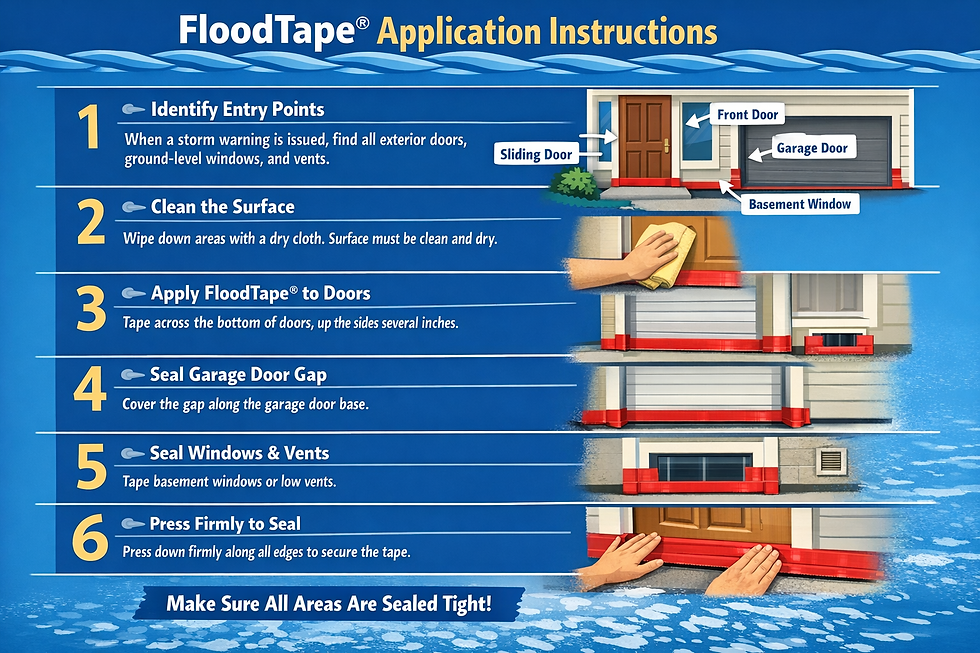
Proper FloodTape® application technique. Clean and dry the surface first, apply firmly, overlap sections by at least two inches. A live demonstration takes about 10 minutes and eliminates most of the uncertainty residents feel about using new products.
Correct removal process. Pull the tape back slowly toward you at a 45-degree angle or lower to prevent surface damage. This matters—rushing the removal can damage paint that proper technique leaves untouched.
When to deploy. Upon receiving flood watches or warnings, before heavy rain events, or when storm surge is predicted. Help residents understand the difference between watches and warnings so they know when to act.
Step 5: Integrate Flood Prep Into Community Communications
Your monthly newsletter, community app, or bulletin board should include seasonal reminders that keep preparedness top of mind without nagging.
Spring: "April showers can turn into May flooding. Pick up your FloodTape® at the clubhouse before the next storm system arrives."
Hurricane Season: "NOAA predicts an above-average hurricane season this year. Supplies are available now—don't wait until a storm is in the forecast when everyone else remembers too."
Year-Round: "Water damage is one of the most common homeowner insurance claims. Fifteen minutes of preparation can save thousands in repairs and weeks of disruption."
Before-and-After Scenarios: What Actually Happens
Here's how these situations typically play out in real communities—the problems residents face and the outcomes when they have the right tools.
Scenario 1: The Garage Door Vulnerability
The Problem: A homeowner in a Florida coastal community routinely experienced water pooling in their garage during heavy rain. The gap beneath the garage door allowed several inches of water inside during storms, damaging stored belongings and creating a persistent mold issue in the drywall. Previous attempts with towels and rolled-up tarps failed consistently. Beyond the cleanup costs, there was the ongoing frustration of wondering whether this storm would be the one that caused serious damage to vehicles or the HVAC equipment in the garage.
The Solution: Using two strips of FloodTape® along the bottom interior edge of the garage door and frame, the homeowner sealed the primary entry point before a predicted tropical storm.
The Result: During the storm, no water entered the garage despite significant rainfall and street flooding. The tape removed cleanly with no damage to the painted frame. The homeowner reported finally feeling prepared rather than anxious when storm warnings appeared—a shift from reactive stress to proactive confidence.
Scenario 2: The Ground-Floor Condo Crisis
The Problem: A condo association in a river-adjacent community dealt with repeated water intrusion through ground-floor sliding glass doors. Multiple units reported damage during flash flood events, leading to contentious insurance claims, disputes over responsibility between the association and individual owners, and concerns about the association's liability exposure. Some owners threatened legal action, arguing the HOA should have provided better guidance or infrastructure protection.
The Solution: The HOA distributed FloodTape® kits to all ground-floor units with clear instructions for sealing around sliding doors. The board documented the distribution and hosted a brief training session, creating a paper trail that demonstrated reasonable care.
The Result: When the next flood warning came, residents deployed the tape in under 15 minutes per unit. Post-event inspection showed zero water intrusion in units that used the protection. Units where residents chose not to participate experienced the typical water damage—but the HOA had documented proof of providing resources and training, which significantly changed the liability conversation.
Scenario 3: Small Business Preservation
The Problem: A retail shop in an HOA-managed commercial strip experienced three floods in two years, each requiring weeks of closure for cleanup and repairs. Insurance premiums increased substantially after the second claim, and the carrier hinted at non-renewal. The owner faced a difficult choice: continue absorbing losses and rising premiums or relocate the business entirely, which would hurt both the owner and the HOA's commercial occupancy rate and common area fee revenue.
The Solution: With FloodTape® applied to the main entrance and rear service door before a predicted storm, the shop created a temporary barrier against water intrusion without the permanent modifications that the commercial lease prohibited.
The Result: The shop stayed dry while neighboring businesses that didn't prepare saw water damage. The owner estimated saving approximately $15,000 in potential inventory losses and avoided another business interruption claim. The insurance relationship stabilized, and the shop remained a viable tenant contributing to the community's commercial success.

Your HOA Flood Preparedness Checklist
Print this and share it with your board:
Annual Tasks:
[ ] Review and update community flood risk assessment
[ ] Replenish bulk supply of FloodTape® and other preparedness materials
[ ] Schedule seasonal preparedness workshop
[ ] Update community emergency contact list
[ ] Inspect and maintain community drainage infrastructure
[ ] Review HOA master policy flood coverage with insurance provider
Before Flood Season:
[ ] Send reminder to residents about available supplies
[ ] Post application instructions on community website or app
[ ] Verify common area buildings have protection supplies staged
[ ] Confirm emergency communication channels are working
[ ] Document all preparedness efforts for liability protection
During Active Warnings:
[ ] Activate community notification system
[ ] Open supply distribution point with extended hours if safe
[ ] Document any community-level protective measures taken
[ ] Coordinate with local emergency management as needed
After Events:
[ ] Survey residents about effectiveness of preparation measures
[ ] Document any damage for insurance and improvement planning
[ ] Collect feedback to improve next season's approach
[ ] Restock supplies that were used
[ ] Update preparedness procedures based on lessons learned
Making the Business Case to Your HOA Board
If you need to convince fellow board members or your management company, here's a framework for the conversation that addresses the concerns they're likely to raise:
Cost comparison: A single roll of FloodTape® costs approximately $50. The average flood damage claim exceeds $50,000. Even if the tape prevents one minor water intrusion event over its 24-month shelf life, the return on investment is substantial. Frame it this way: the cost of protecting every ground-floor unit in your community is probably less than one insurance deductible.
Liability documentation: Providing residents with preparedness tools and education creates documented evidence that the association took reasonable steps to support disaster readiness. This matters significantly if questions arise later about whether the board fulfilled its fiduciary duties. The difference between "we did nothing" and "we provided resources and training" can be substantial in legal contexts.
Property value protection: Communities with reputations for proactive management and disaster preparedness tend to maintain property values better than those with histories of repeated damage and slow responses. This benefits every homeowner's equity position. Prospective buyers and their agents notice these details.
Insurance relationships: Demonstrating community-wide preparedness efforts may support favorable insurance renewal discussions. While no guarantee exists, underwriters generally view proactive risk mitigation positively. Some associations have reported that documentation of preparedness programs helped during renewal negotiations.
Resident satisfaction: Surveys consistently show that residents value associations that go beyond basic maintenance to actively support their safety and property protection. This translates to better board relationships, smoother annual meetings, and the kind of community engagement that makes governance easier.
Take the Next Step for Your Community
Weather patterns are unpredictable. Community preparedness doesn't have to be.
Start by auditing your current approach. Talk to residents about their past water intrusion experiences—you'll likely hear stories you didn't know about. Identify the gaps, literally, where water tends to enter homes in your community. Then build a simple, sustainable program that puts effective tools in residents' hands before they need them.
FloodTape® offers a practical solution that requires no modifications to homes, no professional installation, and no ongoing maintenance. It's the kind of resource that empowers residents to protect their own properties while strengthening the entire community's resilience against water damage.
Ready to protect your community? Visit the FloodTape® shop to explore individual rolls and bulk options for your HOA.

Frequently Asked Questions
Can FloodTape® be used on common area buildings owned by the HOA?
Yes. FloodTape® works effectively on clubhouses, maintenance buildings, pool houses, and any other structures with doors, windows, or other potential water entry points. The tape adheres to most common building materials including wood, metal, glass, and stucco, making it versatile for various construction types found in community facilities. Protecting common area assets helps preserve association reserves and reduces the likelihood of special assessments for major storm-related repairs.
How should an HOA store FloodTape® for community distribution?
Store rolls in a cool, dry location away from direct sunlight—a climate-controlled storage room, maintenance closet, or clubhouse supply area works well. FloodTape® maintains its effectiveness for up to 24 months when stored properly. Keep inventory organized with clear labels showing purchase dates so you can rotate stock appropriately and ensure residents receive fresh product with full adhesive performance.
What if residents damage their property while using FloodTape®?
When applied to clean, dry surfaces and removed properly—pulling slowly toward you at a 45-degree angle or lower—FloodTape® does not damage paint or leave residue. Include proper application and removal instructions with every roll distributed, and consider hosting a demonstration workshop. These steps both protect residents from user error and document the association's reasonable efforts to ensure proper use, which matters for liability purposes.
Does offering flood supplies create liability for the HOA if damage still occurs?
Providing preparedness resources generally reduces rather than increases liability because it demonstrates reasonable care for resident safety and property protection. However, avoid guaranteeing specific outcomes in any communications. Frame offerings as tools that can help reduce—not eliminate—flood risk. Consult with your association's legal counsel for guidance specific to your state and governing documents, but most attorneys view documented preparedness efforts favorably.
How much FloodTape® should a typical homeowner keep on hand?
Most single-family homes need one to three rolls to cover primary entry points including front and back doors plus the garage. Condos or townhomes with fewer entry points may need only one roll. Each 20-foot roll covers multiple standard door frames with overlap for proper sealing. Encourage residents to assess their specific vulnerabilities—ground-floor units with sliding doors may need more coverage than upper-floor units with fewer water entry points.
About This Guide
This article was developed to help HOA boards and community managers implement practical flood preparedness programs that protect residents and association assets. The information draws on FEMA flood statistics, guidance from the Community Associations Institute on association responsibilities, real-world user experiences with FloodTape® documented in customer testimonials, and best practices for community emergency management.
FloodTape® is a patent-pending product designed for temporary flood protection. Always follow manufacturer instructions and combine with other preparedness measures appropriate for your specific flood risk level. The guidance here does not constitute legal advice—consult your association's attorney regarding specific liability questions or governing document interpretation.
Cited Works
[1] FEMA — "Flood Insurance Claims and Premiums." https://www.fema.gov/data-visualization/historical-flood-risk-and-costs
[2] Community Associations Institute — "Community Association Fact Book." https://www.caionline.org/AboutCommunityAssociations/Pages/StatisticalInformation.aspx
[3] FloodTape® — "Alternative to Sandbags for Flooding." https://www.myfloodtape.com/post/alternative-to-sandbags-for-flooding


Comments