
Flood Prep for Airbnb & VRBO Hosts: Safeguarding Guests and Reviews

Updated: Apr 27
Key Takeaways:
One flooding incident can generate negative reviews that cost you thousands in lost bookings
Water most commonly enters through door thresholds, garage seals, and sliding glass door tracks
FloodTape® offers hosts a quick-apply, clean-removal solution that cleaning crews can deploy without special training
Stock enough tape to cover all entry points before storm season arrives
Proactive communication with guests about your flood preparedness builds trust and protects reviews
A single flooding incident can wreck your rental's reputation faster than a dozen five-star stays can rebuild it.
I've talked to hosts who lost entire booking seasons because of one water intrusion event. Not catastrophic damage—just enough water under the front door to soak the entryway, ruin a guest's luggage, and generate the kind of detailed negative review that scares off future bookings for months.
If you're managing a short-term rental in a flood-prone area, protecting your property goes beyond avoiding repair bills. You're protecting the guest experience that drives your entire business. And unlike traditional homeowners who can ride out a bad storm in their own home, you're often coordinating everything remotely while a guest sits in your living room watching water pool at the threshold.
That's a nightmare scenario. But it's also preventable.
Why Short-Term Rental Hosts Face Unique Flood Risks
Managing a vacation rental in a flood-prone region creates challenges that traditional homeowners don't face.
Think about what happens when a storm warning hits:
Your cleaner just finished the turnover. Your next guest checks in at 4 PM. The forecast now shows heavy rain and possible flooding by evening. You're 200 miles away. What's your plan?
Most hosts don't have one. They cross their fingers and hope the weatherstripping holds.
The financial reality makes this gamble even riskier. According to FEMA, just one inch of floodwater can cause more than $25,000 in damage to a home [1]. For vacation rental owners, add the lost booking revenue during repairs, potential liability concerns if a guest is affected, and the lasting impact of negative reviews that can tank your listing's visibility on both Airbnb and VRBO.
Flooding events are also becoming more frequent. The National Oceanic and Atmospheric Administration reports that high-tide flooding along U.S. coastlines has increased substantially over the past two decades [2]. If your rental sits in a coastal area, near a river, or in a low-lying region, the question isn't if you'll face water intrusion—it's when.
What Platform Policies Actually Cover (And What They Don't)
Many hosts assume that Airbnb's AirCover or VRBO's liability protection will handle flood damage. The reality is more complicated.
These policies typically cover guest injuries and some property damage, but they're not designed to replace flood insurance or cover the business interruption costs that hurt most. If flooding forces you to cancel bookings during repairs, you're absorbing that lost revenue. If water damage creates a musty smell that generates complaints for weeks afterward, no policy covers the reputation hit.
The platforms also expect hosts to maintain their properties responsibly. A guest review stating "water came under the door during the storm and the host had no plan" doesn't just hurt your ranking—it suggests negligence that could complicate any future claims.
Your best protection is prevention.
The Guest Experience Factor
What many hosts overlook is how flood preparedness affects the guest experience itself.
Consider these scenarios:
A sudden storm floods the garage, and guests can't access their rental car for their morning departure
Water seeps under the front door, soaking the luggage a guest left on the entryway floor
A basement-level bedroom develops moisture issues, creating musty odors that trigger complaints
Guests wake up to standing water in the carport and have no idea what to do
Each situation creates stress for guests and generates the kind of authentic negative feedback that's nearly impossible to dispute. These aren't exaggerations or unreasonable complaints—they're legitimate grievances about a stay that went sideways.
Smart flood prep prevents these scenarios before they happen.

Common Entry Points for Water in Vacation Rentals
Understanding where water enters your property is the first step toward effective protection.
Most short-term rentals share these vulnerable spots:
Exterior Door Thresholds
The gap between your door bottom and threshold is the most common entry point for water. Standard weatherstripping often fails during heavy rain or storm surge conditions because it's designed for draft prevention, not water intrusion. That quarter-inch gap that barely lets in cold air can channel gallons of stormwater into your entryway.
Garage Doors
Garage door seals degrade over time, and the wide span creates multiple potential leak points along the bottom edge. Many vacation rentals have living spaces, laundry areas, or storage accessible through the garage—meaning water that enters here spreads quickly.
Sliding Glass Doors
Popular in vacation rentals for their views and access to patios or balconies, sliding doors often have inadequate track drainage and worn seals. Wind-driven rain can overwhelm the weep holes designed to drain water away, forcing it inside instead.
Low Windows and Basement Access
Ground-level windows and basement window wells can collect water during heavy rainfall, especially if drainage hasn't been maintained. Older properties often have window seals that have degraded over decades.
HVAC Penetrations and Vents
Dryer vents, bathroom exhausts, and AC line penetrations create small gaps that normally go unnoticed. During flooding conditions, these can become entry points, especially on properties where utilities are at ground level.
Solving the Remote Management Problem
Traditional flood protection methods present real problems for vacation rental hosts.
Sandbags require someone to haul 50-pound bags, position them correctly, and then dispose of the muddy mess afterward. You can't ask a cleaner to keep a pallet of sandbags in their sedan. Permanent flood barriers require significant installation and may not suit rental aesthetics—or landlord approval if you don't own the property. Duct tape and plastic sheeting often fail under pressure and leave sticky residue that damages door finishes.
None of these solutions work when you need to deploy them remotely, quickly, and without specialized training.
FloodTape® offers a different approach. This 8-inch-wide waterproof adhesive tape creates a temporary seal over doors, windows, and other entry points. It's designed for quick application—no tools required—and removes cleanly without damaging paint or surfaces [3].
For short-term rental hosts, this solves several practical problems at once:
Remote deployment becomes realistic. A few rolls of tape stored in the utility closet takes up less space than a single sandbag. Your cleaning crew or property manager can apply it with minimal training—just follow the instructions you leave in the property binder.
No storage hassle. FloodTape® maintains its adhesive properties for up to 24 months when stored properly, so you can stock up before storm season and not worry about it degrading on the shelf.
Guest-friendly removal. After the threat passes, the tape peels off without residue, leaving no evidence of the emergency [3]. Your next guest arrives to a pristine property, not tape marks on the doorframe.
Works on rental-typical surfaces. FloodTape® adheres to wood, glass, metal, vinyl, and even textured surfaces like stucco [3]—the materials you actually find in vacation properties.
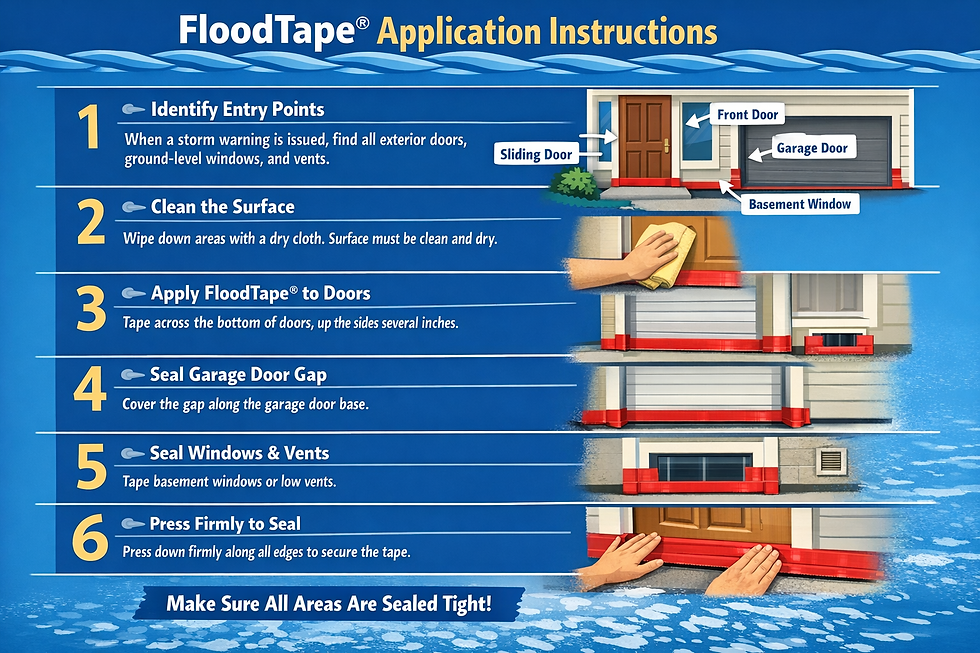
Application Instructions for Your Property Team
Applying FloodTape® is straightforward enough that you can include instructions in your property's emergency binder. Here's what to tell your cleaning crew or property manager:
Step 1: When a storm warning is issued, identify all exterior entry points that could allow water in—front door, back door, garage, sliding doors, and any ground-level windows.
Step 2: Wipe down the surfaces with a dry cloth. The tape needs clean, dry surfaces to seal properly—this takes two minutes per door.
Step 3: Apply tape across the bottom of exterior doors, extending several inches up each side to seal the corners where water likes to find gaps.
Step 4: Cover the gap between the garage door and floor with overlapping strips if you have a garage.
Step 5: Seal any basement windows or low vents that could allow water entry.
Step 6: Press firmly along all edges to create a tight seal.
One 20-foot roll typically covers a standard entry door and garage door threshold. For properties with multiple entry points, sliding glass doors, or basement windows, keeping a 6-pack on hand ensures you can seal everything that needs protection [5].

Real Protection Scenarios: Before and After
Scenario 1: Coastal Cottage During Hurricane Season
The Problem: A Florida vacation rental regularly experienced minor flooding during tropical storms. Water would seep under the front door and into the garage, damaging flooring and forcing costly turnover delays. The property manager tried sandbags, but coordinating their delivery and placement during a storm warning was impossible with her schedule. One guest left a two-star review mentioning "water damage and musty smell that made the stay uncomfortable."
The Solution: The property manager now keeps a 6-pack of FloodTape® in the utility closet. When tropical storm watches are issued, her cleaner applies tape to the front door, back door, and garage threshold during the final turnover before the storm. Total application time: about 15 minutes.
The Result: During the last named storm, despite street-level flooding, the interior stayed completely dry. The quick cleanup and on-schedule guest arrival earned a glowing review praising the "well-maintained property even after the storm."
Scenario 2: Lakefront Cabin During Spring Thaw
The Problem: A Minnesota lake cabin faced annual flooding during snowmelt season. The owner, who lives four hours away, tried having a local caretaker deploy sandbags but found them impractical to transport and store at the remote property. Multiple spring bookings were lost to water damage cleanup, costing thousands in revenue.
The Solution: With FloodTape® stored in the utility closet year-round, the local caretaker can now seal entry points within minutes when flood warnings appear. No heavy lifting, no special equipment, no advance coordination needed.
The Result: The cabin stayed dry through spring thaw for the first time in years, and bookings continued without interruption. The owner estimates the prevention saved over $3,000 in lost revenue and repair costs.
Communicating With Guests During Flood Warnings
Part of protecting your reviews is managing guest expectations when weather threats emerge. Panicked or surprised guests leave worse reviews than guests who felt informed and cared for.
Here's a communication template you can adapt:
When a storm warning is issued (24-48 hours out):
"Hi [Guest Name], I wanted to give you a heads-up that [storm/heavy rain] is forecast for [date]. Our property has been prepared for this type of weather—we've sealed all entry points and the home is designed to stay dry and comfortable. You shouldn't need to do anything, but I wanted you to know I'm monitoring the situation. Please don't hesitate to reach out if you have any questions or concerns. I'll check in again tomorrow with any updates."
If conditions worsen:
"Quick update: the forecast has intensified, but our property remains secure. Please avoid opening the exterior doors that have been sealed (you'll see protective tape along the bottom—this is keeping water out). The [back door/garage/alternate entry] remains accessible. Let me know if you need anything at all."
This approach accomplishes several things: it shows you're proactive, explains what guests might see (the tape), and keeps communication open so they contact you rather than stewing on complaints.

Your Flood Prep Checklist for Short-Term Rentals
Use this checklist to protect your vacation rental property:
Immediate Steps
[ ] Walk your property and identify all exterior entry points where water could intrude
[ ] Stock adequate FloodTape®—plan for enough to cover all doors, garage, and any low windows
[ ] Create clear written instructions (with photos) for your cleaning crew or property manager
[ ] Add flood emergency procedures to your guest welcome book
[ ] Draft template messages for guest communication during weather events
Seasonal Preparation
[ ] Inspect and replace worn weatherstripping on all doors
[ ] Clear gutters and drainage pathways around the property
[ ] Test sump pumps if your property has them
[ ] Review your insurance coverage for flood damage and business interruption
[ ] Confirm your property manager knows where supplies are stored
During Storm Warnings
[ ] Apply FloodTape® to doors, garage, and low windows before conditions deteriorate
[ ] Move any guest valuables and electronics away from entry points to higher ground
[ ] Communicate proactively with incoming and current guests about conditions
[ ] Document property condition with timestamped photos
Post-Event
[ ] Remove FloodTape® once the threat has passed and inspect for any water entry
[ ] Address any moisture issues immediately—don't let musty smells develop before the next guest
[ ] Restock your emergency supplies
[ ] Update your procedures based on what worked and what didn't
Protecting Your Reviews Means Protecting Your Property
Your vacation rental's reputation is built one guest experience at a time. A single flooding incident can undo months of careful hosting—not because of catastrophic damage, but because of the stress and inconvenience it creates for guests who expected a comfortable stay.
The guests who experience water damage aren't just inconvenienced. They're dealing with wet luggage, disrupted vacation plans, and legitimate concerns about the property's maintenance. Their reviews will reflect that reality, and those reviews will sit at the top of your listing, visible to every potential guest who considers booking.
Proactive flood prep demonstrates the kind of property care that guests notice and appreciate. When you can tell guests, "We've prepared for storm season—the property is sealed and secure," you're providing reassurance that translates directly into trust.
For hosts managing properties in flood-prone regions, FloodTape® offers an easy-to-deploy, clean-removal solution that fits the unique demands of vacation rental management. Keep a supply on hand, train your property team on application, and turn flood season into just another operational challenge you've already solved.
Protect Your Rental Before the Next Storm
Don't wait for a weather warning to think about flood protection. Stock your property with FloodTape® now, and give yourself—and your guests—peace of mind when severe weather approaches.
Frequently Asked Questions
How many rolls of FloodTape® do I need for a typical vacation rental?
Most vacation rentals need two to three rolls for comprehensive coverage. One 20-foot roll covers a standard entry door and garage door threshold. For properties with multiple exterior doors, sliding glass doors, or basement windows, plan for four to six rolls to ensure you can seal all vulnerable entry points during a storm warning. The 6-pack bundle offers a discount for hosts who want to be fully prepared [5].
Can my cleaning crew apply FloodTape® without special training?
Yes. FloodTape® requires no tools and installs in minutes. Include simple written instructions with photos in your property management binder, and most people can effectively seal a door in under five minutes. Consider doing a brief walkthrough during your next property visit so your team feels confident handling emergency applications before they're needed.
Will FloodTape® damage my rental's painted doors or finished surfaces?
FloodTape® is engineered to remove cleanly without leaving residue or damaging paint, varnish, or other finishes [3]. This makes it ideal for vacation rentals where maintaining aesthetic appearance matters—your next guest arrives to a pristine property, not tape marks on the doorframe.
How long can FloodTape® stay applied if a storm stalls over the area?
FloodTape® can remain applied for extended periods without losing effectiveness or causing surface damage. For best results, remove the tape once the flooding threat has passed and surfaces are dry. Stored properly, the tape maintains its adhesive properties for up to 24 months [4], making it reliable for seasonal storage between storm seasons.
Is FloodTape® effective against serious flooding or just minor water intrusion?
FloodTape® provides effective protection against low-level flooding and water intrusion at entry points. One customer reported it holding back approximately two feet of standing water for an extended period [6]. For severe flooding involving deep water or significant pressure, FloodTape® works best as part of a comprehensive flood mitigation strategy—but for the door-threshold and garage-seal flooding that most commonly affects vacation rentals, it's highly effective as a standalone solution.
About This Guide
This flood preparation guide was developed for vacation rental hosts seeking practical, actionable protection strategies for their properties. FloodTape® is manufactured by Duke Product Line, founded by Matthias Herzog after 15 years of firsthand experience with hurricane-related flooding in Florida. The product was developed specifically to address the shortcomings of traditional flood protection methods—eliminating the heavy lifting of sandbags and the surface damage caused by conventional tapes. All recommendations reflect real-world application experience and verified customer outcomes.
Cited Works
[1] FEMA — "Flood After Fire Fact Sheet."
[2] NOAA — "2023 State of High Tide Flooding and Annual Outlook."
[3] FloodTape® — "Frequently Asked Questions."
[5] The FloodTape®— "FloodTape® 6-Pack." https://www.myfloodtape.com/product/floodtape-6-pack


Comments